
Key Highlights
- Sundar Pichai warns that no company will be immune if the AI bubble bursts.
- The head of Google’s parent firm Alphabet calls out “irrationality” in the current AI boom.
- Google is investing £5bn in UK artificial intelligence over two years, including at DeepMind in London.
- Pichai acknowledges the immense energy needs of AI and the potential impact on climate targets.
Alphabet CEO Warns Against AI Bubble Burst
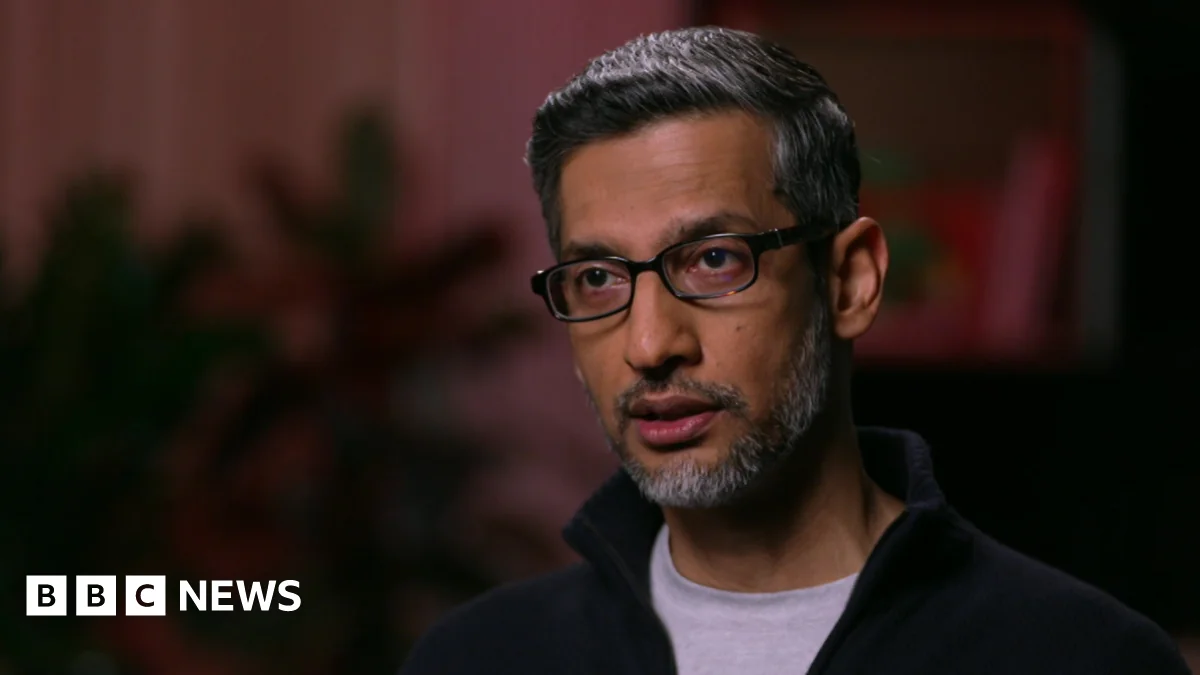
In a recent interview with BBC News, Sundar Pichai, CEO of Google’s parent firm Alphabet, issued a stark warning about the current state of artificial intelligence (AI). He stated that no company will be immune if the AI bubble were to burst, echoing concerns prevalent in Silicon Valley and beyond.
Market Irrationality and AI Investment
Pichai highlighted the “irrational” nature of the current AI boom, citing recent market movements as evidence. According to reports, Alphabet shares have doubled in value over seven months, reflecting investor confidence in the company’s ability to navigate the competitive landscape posed by OpenAI, the owner of ChatGPT.
“While there is an extraordinary moment here with the growth of AI investment,” Pichai noted, “there is also some irrationality.” He drew a parallel to the dotcom bubble of the late 1990s, warning that such cycles can lead to overinvestment and subsequent market corrections.
Google’s Position Amidst Market Uncertainty
In response to concerns about Google’s exposure to potential AI market turbulence, Pichai emphasized the company’s unique “full stack” model. This approach allows Google to own its hardware, software, and data, giving it a strategic advantage over competitors like Nvidia.
“We have a better position to ride out any AI market volatility,” he stated. However, he also acknowledged that these investments come with significant energy demands, which currently make up 1.5% of global electricity consumption according to the International Energy Agency (IEA).
Investing in UK AI and Climate Concerns
Alphabet recently committed £5bn over two years to expand its presence in the UK’s artificial intelligence sector, including at DeepMind’s London headquarters. This move aims to develop cutting-edge research while positioning the UK as a leading player in global AI.
Pichai addressed the environmental implications of such large-scale AI projects, recognizing that they could impact climate targets. While acknowledging the slippage on these goals, he maintained Google’s commitment to achieving net-zero by 2030 through investments in new energy technologies.
Impact on Jobs and Societal Disruptions
The CEO also touched on the broader implications of AI for jobs and society. He acknowledged that while AI will revolutionize many professions, it will require people to adapt their skills accordingly. “The people who do well in each profession are those who learn how to use these tools,” he noted.
Pichai’s comments come amidst growing scrutiny over the state of the AI market and its potential impact on both companies and consumers. As the industry continues to evolve, Pichai’s warnings serve as a timely reminder of the challenges ahead for all stakeholders involved in this burgeoning field.


