
Key Highlights
- The final five grand prix weekends of the 2025 F1 season will be defined by Max Verstappen’s pursuit of Oscar Piastri and Lando Norris.
- Mexico City’s circuit is characterized by thin air, bumps, and a long straight, giving Red Bull an advantage with their RB21.
- The upcoming races in Brazil, Las Vegas, Qatar, and Abu Dhabi will present varying challenges to the teams, impacting tyre management strategies.
- McLaren’s MCL39 is expected to perform well on low-downforce tracks, while Ferrari may find opportunities at lower-downforce venues due to their car’s characteristics.
The Final Five Races of 2025: Verstappen’s Pursuit and the Remaining Challenges
As we approach the final stretch of the Formula 1 season in 2025, the race for the world championship is heating up. Max Verstappen, driving for Red Bull Racing, is now a significant threat to McLaren’s Oscar Piastri and Lando Norris as they seek to defend their lead.
Stuart Codling from Autosport noted that Verstappen’s competitive transformation means the remaining races will be pivotal in determining who emerges as champion. The Dutch driver has shown remarkable improvement, making his title challenge more realistic than ever before.
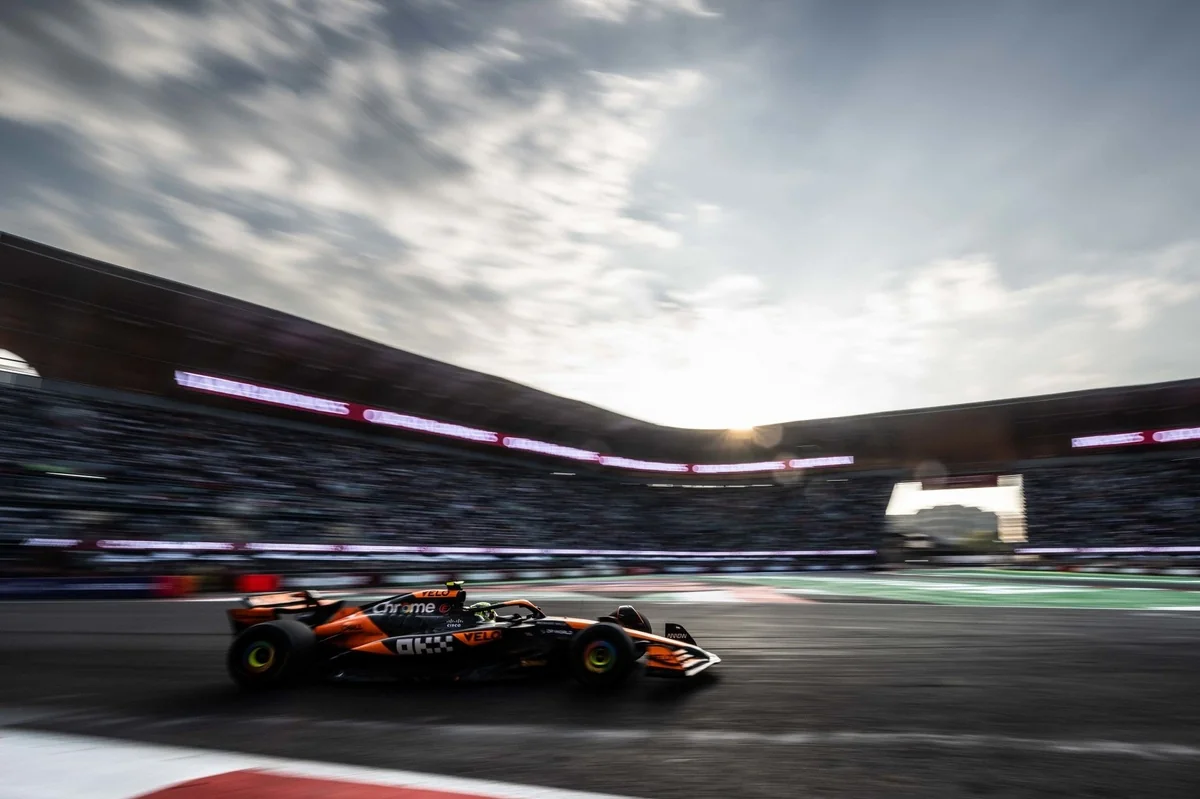
Mexico City: A Circuit with Altitude and Bumps
Mexico City’s track presents unique challenges due to its high altitude. The thin air at 2,240 meters above sea level can affect tyre performance and overall car dynamics. Teams must carefully balance downforce settings to manage the thinner air, which often means reducing aerodynamic components compared to lower-altitude circuits.
Red Bull’s RB21 has thrived here in recent seasons due to its ability to maintain stable downforce at higher ride heights, crucial for navigating the track’s bumps. The long straight between Turns 7 and 11 also favors teams that can manage tyre degradation effectively during multi-stop races.
Interlagos: A Circuit with Complicated Dynamics
Brazil’s Interlagos offers a mix of fast and twisty sections, requiring cars to be set up for compromise. The track’s elevation further complicates matters, making it an interesting challenge for teams. Pirelli will introduce new tyre compounds this year, shifting the strategy from two-stop races last season.
McLaren expects to have a competitive edge on Interlagos due to their MCL39’s efficiency at higher downforce settings and its advantage in low-downforce tracks. However, Red Bull’s performance could be influenced by their recent development successes, potentially making the race more unpredictable.
The Final Analysis: Verstappen’s Potential and McLaren’s Advantage
As we look ahead to Qatar and Abu Dhabi, the track characteristics will further influence the outcome of these races. The Losail circuit favors McLaren due to its fast flowing nature but was underperforming last year for reasons yet to be fully understood.
Abu Dhabi is likely to see Red Bull closer in performance compared to previous years, given Verstappen’s recent success at lower downforce tracks. However, the final race remains a crucial opportunity for teams to secure their championship aspirations or make a statement of intent for next season.
The remaining races will not only determine who takes home the 2025 world title but also shape the future direction of the top teams in Formula 1. As we watch these final five grands prix unfold, all eyes will be on Verstappen and his quest to challenge the current leaders.


