
Key Highlights
- A new “mid-tech” development in Cambridge has been approved for a second time after Anglian Water called for the plans to be halted.
- The developer, Columbia Threadneedle Investments Ltd, asked for full planning permission for the first phase of the redevelopment and outline permission for the rest of the site.
- Planning officers recommended that the application should be approved, subject to an updated condition requiring the developer to submit a foul drainage scheme for approval before development starts.
- The decision was put to a vote at a planning committee meeting on October 29, with three councillors voting to approve and three against.
Cambridge City Council Approves New “Mid-Tech” Development Despite Anglian Water Objections
In a recent development in Cambridge, the city council has approved plans for a new “mid-tech” building project despite objections from local water company Anglian Water. The decision, made at a planning committee meeting on October 29, marks a significant milestone in the ongoing saga of the redevelopment of The Paddocks industrial estate.
Developer’s Proposal and Local Planning Concerns
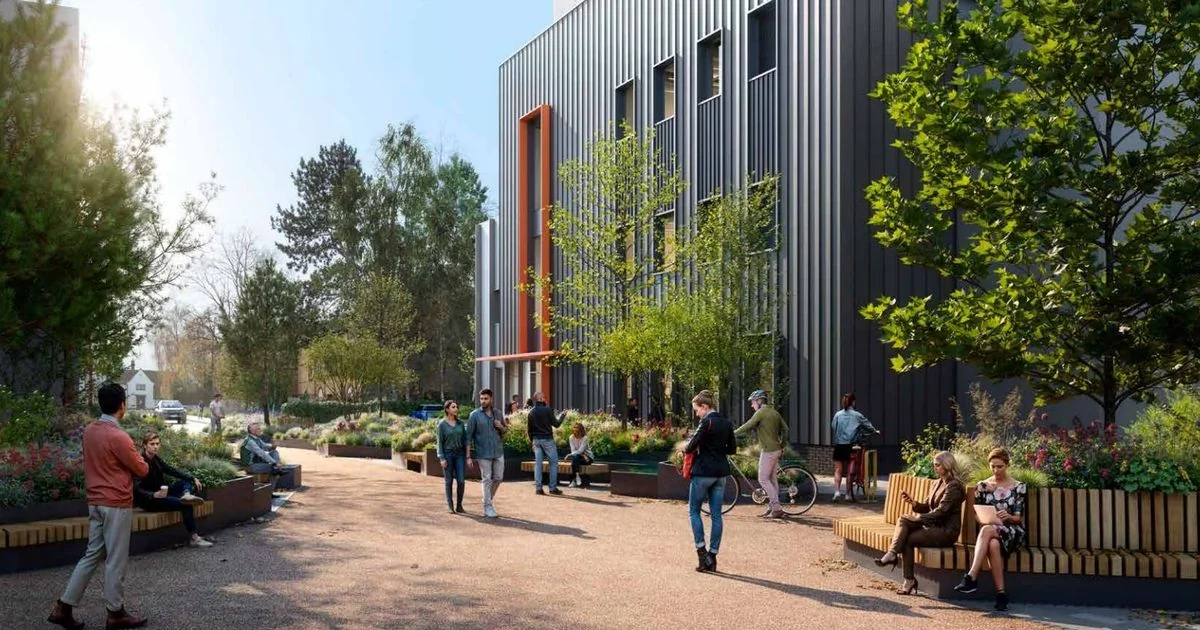
The developer, Columbia Threadneedle Investments Ltd., sought full planning permission for the first phase of the redevelopment, with outline permission requested for the remainder. This ambitious project aims to transform the existing industrial estate into a hub that integrates research and development facilities, light industrial space, and offices.
However, before formal approval could be granted, Anglian Water issued an objection on October 29, citing insufficient wastewater treatment capacity at the Cambridge sewage works as the primary concern. The water company’s objection stemmed from recent government announcements indicating that it would no longer receive funding to relocate its waste treatment plant.
Planning Officers’ Recommendation and Public Reaction
In response to Anglian Water’s concerns, planning officers recommended that the application should be approved, subject to an additional condition. This stipulation requires the developer to submit full details of a foul drainage scheme for approval prior to any development commencing.
Planning officers emphasized that Anglian Water had not provided evidence of potential pollution harm or consideration of existing foul flows from the site. They argued that it was unreasonable to hold up city development until June, maintaining that the proposed project would actually reduce water demand by 60 percent and lower foul discharge by 10.9 percent.
Despite these assurances, some council members expressed reservations.
Councillor Martin Smart highlighted the broader implications of the objection, noting it “causes a big problem” for new development in Cambridge. He was joined by Councillor Katie Thornburrow, who argued that Anglian Water had not sufficiently planned or invested in its assets.
However, other councillors like Mike Todd-Jones remained concerned about potential housing losses on the site, which had been allocated for 120 homes under the local plan. He emphasized the critical need to bring more housing online and expressed ongoing concerns over the application’s approval.
Implications of the Decision
The narrow vote—three councillors in favor and three against—demonstrates the complexity and sensitivity of balancing industrial development with environmental concerns. The decision could set a precedent for future projects, influencing both planning permissions and water management strategies in Cambridge.
Industry experts suggest that such developments are crucial for supporting local innovation and economic growth. However, they also highlight the need for careful coordination between developers, local authorities, and utility companies to ensure sustainable development practices.
The approval of this “mid-tech” project underscores the ongoing challenges faced by cities like Cambridge in navigating rapid urbanization while maintaining environmental standards. As Cambridge continues to grow, stakeholders will be closely watching future developments that balance these competing interests.


