
Key Highlights
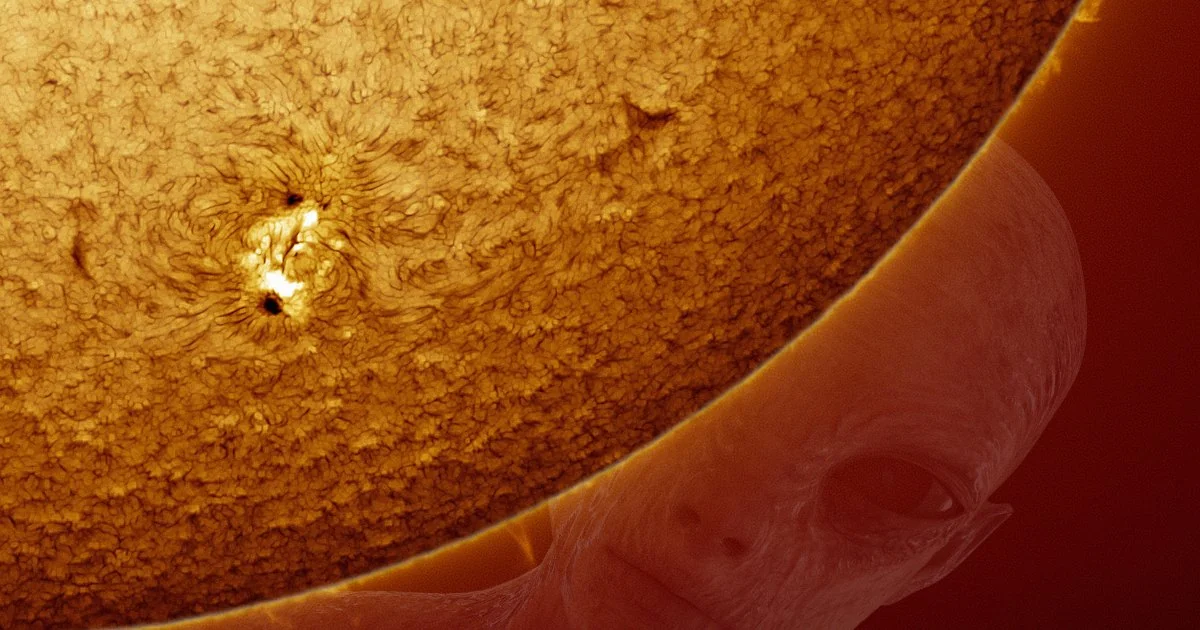
- Avi Loeb suspects that the interstellar object 3I/ATLAS might be a mothership from an intelligent extraterrestrial civilization.
- The object is expected to reach its perihelion on October 29, potentially using the Sun’s gravitational pull for acceleration or deceleration.
- Loeb suggests that if it’s indeed a spacecraft, it may release smaller probes during its closest approach to Earth.
- The object will likely continue along its original path and exit the Solar system, but Loeb considers an Oberth maneuver as a black swan event with small probability.
The Mysterious 3I/ATLAS
In the realm of astronomy, the discovery of interstellar object 3I/ATLAS has stirred up a wave of speculation and intrigue. Discovered by the ATLAS survey in January 2017, this enigmatic visitor from another solar system has captured the attention of scientists around the globe.
Avi Loeb’s Hypothesis: A Mothership or Comet?
Harvard astronomer Avi Loeb, known for his bold theories and unconventional thinking, has suggested that 3I/ATLAS might not be what it initially appears. While most scientists believe that 3I/ATLAS is a comet due to its behavior resembling known comets in our solar system, Loeb remains skeptical. Loeb’s hypothesis centers on the possibility that 3I/ATLAS could be an enormous “mothership” sent by intelligent extraterrestrial civilizations. He points out several anomalies in the object’s trajectory and composition, which he believes are inconsistent with a natural comet.
The Sun’s Role: An Opportunity for Maneuvering
October 29 marks a significant moment for 3I/ATLAS as it reaches its perihelion. According to Loeb, this is an opportune time for the object to use the Sun’s gravitational pull for acceleration or deceleration, much like a spacecraft would in space travel. In his latest blog post, Loeb highlighted the Oberth effect, which refers to the increased efficiency of a rocket engine when fired at high speed. He argues that this principle could be applied to 3I/ATLAS during its closest approach to the Sun. “As a result of this so-called Oberth effect, it is most energy-efficient for a spacecraft engine to burn its fuel when its orbital velocity is greatest,” Loeb explained.
Hidden Behind the Sun: A Strategic Maneuver?
Loeb’s hypothesis includes the possibility that 3I/ATLAS may release smaller probes during its perihelion passage. He posited, “If 3I/ATLAS is a massive mothership, it will likely continue along its original gravitational path and ultimately exit the Solar system.” However, he also noted that the timing of this maneuver coincides with the object’s hiding behind the Sun from Earth-based telescopes.
“This opportune time happens to be during the same period when it is hidden from view to Earth-based telescopes,” Loeb suggested. “Was this a mere coincidence or a result of orbital design and basic astronautics?” He concluded that while 3I/ATLAS appears most likely to be a natural comet, the remote possibility of an Oberth maneuver must be considered seriously as a black swan event with small probability.
Expert Perspectives: Skepticism Prevails
Despite Loeb’s intriguing hypothesis, many in the scientific community remain skeptical. Tom Statler, NASA’s lead scientist for solar system small bodies, dismissed the idea of 3I/ATLAS being technological in origin. “It looks like a comet,” he stated unequivocally, adding that it has some unusual properties but strongly resembles known comets. However, Loeb insists on maintaining his hypothesis and encourages further observation.
He wrote, “Science is guided by evidence and not by expectations.” Loeb plans to monitor the object during November and December 2025 for any unusual activity or new objects emerging from it. In conclusion, while many scientists believe that 3I/ATLAS is a natural comet, Avi Loeb’s hypothesis adds an element of mystery and possibility. As the object continues its journey through our solar system, future observations will provide critical insights into this interstellar visitor.


