
Key Highlights
- The two most important coral species in Florida’s reef ecosystem have been declared functionally extinct.
- A 2023 marine heat wave caused nearly 100% mortality of elkhorn and staghorn corals in the Florida Keys and near Dry Tortugas islands.
- Experts suggest that importing heat-tolerant corals from outside the state might be the only path forward for restoration efforts.
- The die-off of these key species could have significant implications for coastal ecosystems and tourism industries in Florida.
Florida’s Coral Reefs Face Critical Decline
In a grim study published in Science, nearly 50 researchers concluded that extreme ocean heat killed off two crucial coral species that had been building reefs in Florida since the Ice Age. The elkhorn and staghorn corals, which have dominated coastal Caribbean ecosystems for at least 250,000 years, are now declared functionally extinct.
Mass Mortality Due to Extreme Ocean Heat
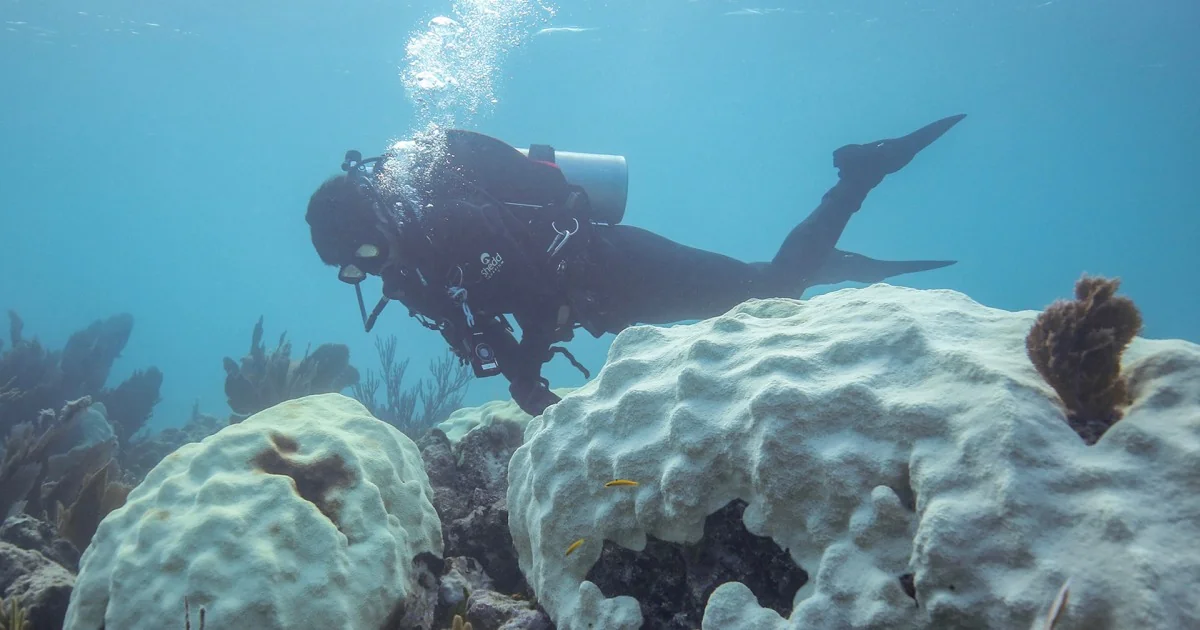
The findings revealed that between 97.8% and 100% of elkhorn and staghorn corals have died in the Florida Keys and near Dry Tortugas islands following a historic marine heat wave in 2023. Divers from institutions across the state documented coral mortality at nearly 400 sites, visiting more than 52,000 coral colonies.
“For the first time, we’ve had a heat wave that was so extreme it has surpassed the limits of some of the most ecologically important species in an entire ecosystem to survive,” stated Ross Cunning, a coral biologist from Chicago’s Shedd Aquarium. “The numbers of individuals remaining are now so low that they cannot perform their ecological functions in any meaningful way.” This marks the functional extinction of two incredibly important ecosystem engineers for coral reefs in Florida.
Recovery Efforts Compromised by Heat Wave
The death of these corals has significant implications not only for marine life but also for coastal communities. Corals support fish and other aquatic species that help feed coastal communities and attract tourists. Importantly, they provide a natural barrier for Florida’s coastline during hurricanes and storms.
As the dead structures break down due to waves and algae, their absence will further scramble the state’s coastal ecosystems. “All of those little branches will start to break down and it’ll start to just crumble,” noted Laura Mydlarz, a professor at the University of Texas at Arlington who researches coral disease and immunity.
The 2023 heat wave was part of a broader trend. According to data from the National Oceanic and Atmospheric Administration’s Coral Reef Watch, heat stress has affected more than 84% of the world’s reefs in recent years, considered the world’s fourth mass bleaching event.
Future Restoration Possibilities
The loss of these corals is a significant blow to ongoing restoration efforts. In Florida, decades of work aimed at increasing coral coverage have been erased by this single heat wave. Importing heat-tolerant corals from outside the state might be necessary for future restoration projects.
While scientists consider gene-editing tools as potential solutions, Mydlarz warned that such methods are still in their infancy and fraught with bioethical concerns. “That’s on the table because anything is on the table,” she stated.
However, with the current state of coral reefs around the world, including the Caribbean region, experts believe that introducing resilient corals from other areas might be the only path forward.
The declaration of functional extinction for elkhorn and staghorn corals in Florida could bolster arguments that global temperatures have crossed a threshold for irreversible decline. With international attention on climate change intensifying, the future of these vital species hangs precariously in the balance.


