
Key Highlights
- 2025 declared as “the Year of the Blooming Octopus” after record numbers were spotted off the south-west coast of England.
- Octopus populations have been at their highest level since 1950, linked to warmer winters due to climate change.
- Fishermen caught more than 1,200 tonnes of octopus in UK waters in the summer of 2025.
- The Wildlife Trusts warn that if population numbers remain high, it could impact shellfish species and fishing industries.
Record Octopus Numbers off England’s Coast
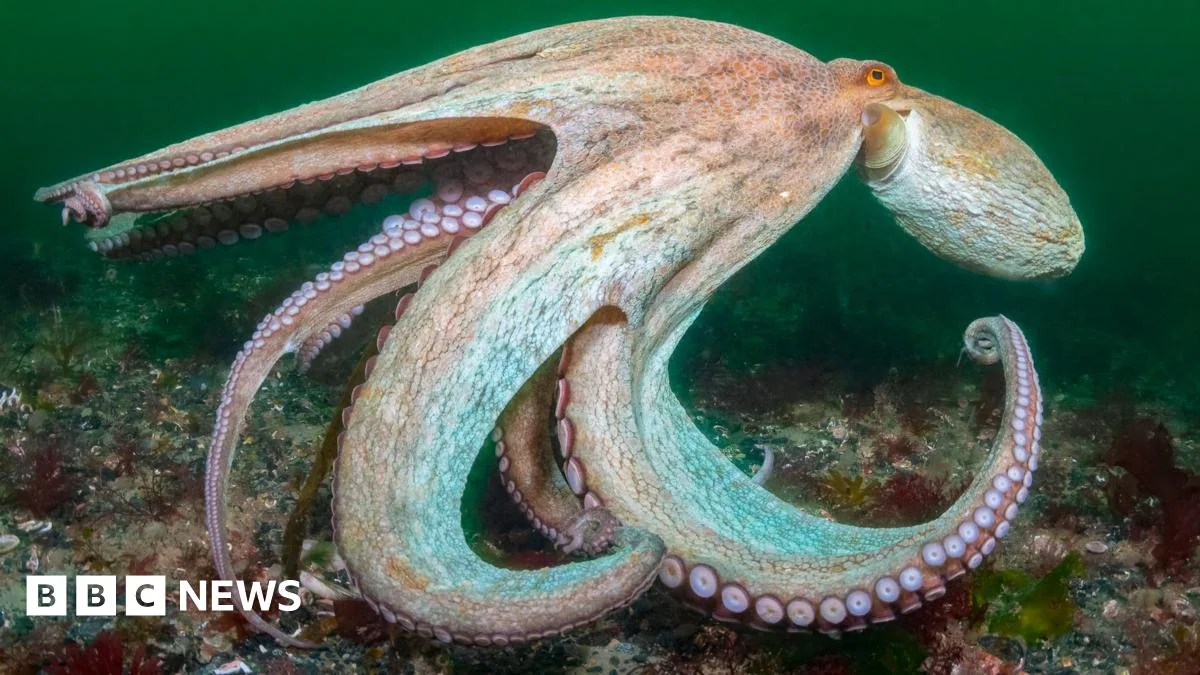
In a significant development for marine life in the United Kingdom, 2025 has been declared as “the Year of the Blooming Octopus” by a wildlife charity following an unprecedented increase in octopus sightings. This declaration comes on the heels of record numbers being spotted off the south-west coast of England, with experts linking this phenomenon to warmer winters brought about by climate change.
Octopus Population Surge
The Wildlife Trusts’ annual marine review revealed that octopus populations have reached their highest levels since 1950. This increase has been particularly noticeable in the waters off Devon and Cornwall, where volunteers reported a more than 1,500 percent increase in sightings compared to figures from 2023. The eight-armed cephalopods are thought to be Octopus vulgaris, a species commonly found in warmer Mediterranean waters.
Impact on Fisheries
The rise in octopus numbers has raised concerns among marine conservationists and fishermen alike. Ruth Williams, the head of marine for The Wildlife Trusts, stated that these creatures are having a significant impact on shellfish such as lobster, crabs, and scallops. “They are having an impact on those (shellfish) species around our shores,” she said in an interview with BBC’s Today programme. “And as a consequence, they will be having an impact on our fishing industry who target those species as well.” According to government data, crab landings have been down, while catches of lobster, crawfish, and scallops remain stable.
Expert Observations
Marine biologists like Matt Slater from the Cornwall Wildlife Trust have documented extraordinary behaviors among the octopuses. “We’ve seen octopuses jet-propelling themselves along,” he observed. “We’ve seen them camouflaging themselves, looking just like seaweeds. And we’ve even seen them walking, using two legs to nonchalantly cruise away from divers underwater.” These observations suggest that the octopus population has not only increased but also adapted to their new environment.
The question remains whether this rise in numbers is permanent or cyclical. For now, conservationists are urging a cautious approach to ensure that fishing and eating habits adapt accordingly. “There are opportunities,” Williams added. “Our fishing industry is doing some research into evolving with the changing fisheries we’re seeing as a result of climate change.” This highlights the ongoing challenge for both marine ecosystems and human industries in adapting to the impacts of climate change.
While 2025 has been marked as a year of hope for octopus enthusiasts, it also underscores the broader environmental issues at play.
As temperatures continue to rise, the future of marine life, including octopuses, remains uncertain. The Wildlife Trusts’ findings serve as a stark reminder that we must address climate change before irreversible damage is done.


