
Key Highlights
- The Tokyo High Court ruled that Japan’s failure to recognize same-sex marriages is constitutional.
- This decision overturns a 2024 district court ruling, which deemed the ban as unconstitutional.
- Eight plaintiffs, including a transgender man, filed the case, arguing for legal recognition and basic rights.
- The ruling will now be heard by the Supreme Court, with all six cases expected to receive unified decisions.
Background on Same-Sex Marriage in Japan
In recent years, the debate over same-sex marriage has intensified in Japan. The country’s legal framework does not currently recognize marriages between individuals of the same sex, leaving LGBTQ+ couples without the same rights and protections as heterosexual married couples.
The Legal Landscape
Japan’s Civil Code and Family Registration Act exclude same-sex couples from obtaining official marital status, which denies them access to a wide range of legal benefits such as inheritance, tax exemptions, and joint property ownership. This has led to significant advocacy efforts by organizations like Marriage for All Japan, which launched a nationwide campaign in 2019 to challenge the constitutionality of these laws.
The Court Ruling and Its Impact
On Friday, the Tokyo High Court made a landmark decision that is likely to have far-reaching implications. The court ruled that Japan’s current legal framework, which does not recognize same-sex marriages, is constitutional. This ruling came after five other high courts had previously deemed the ban as unconstitutional.
Plaintiffs’ Perspective
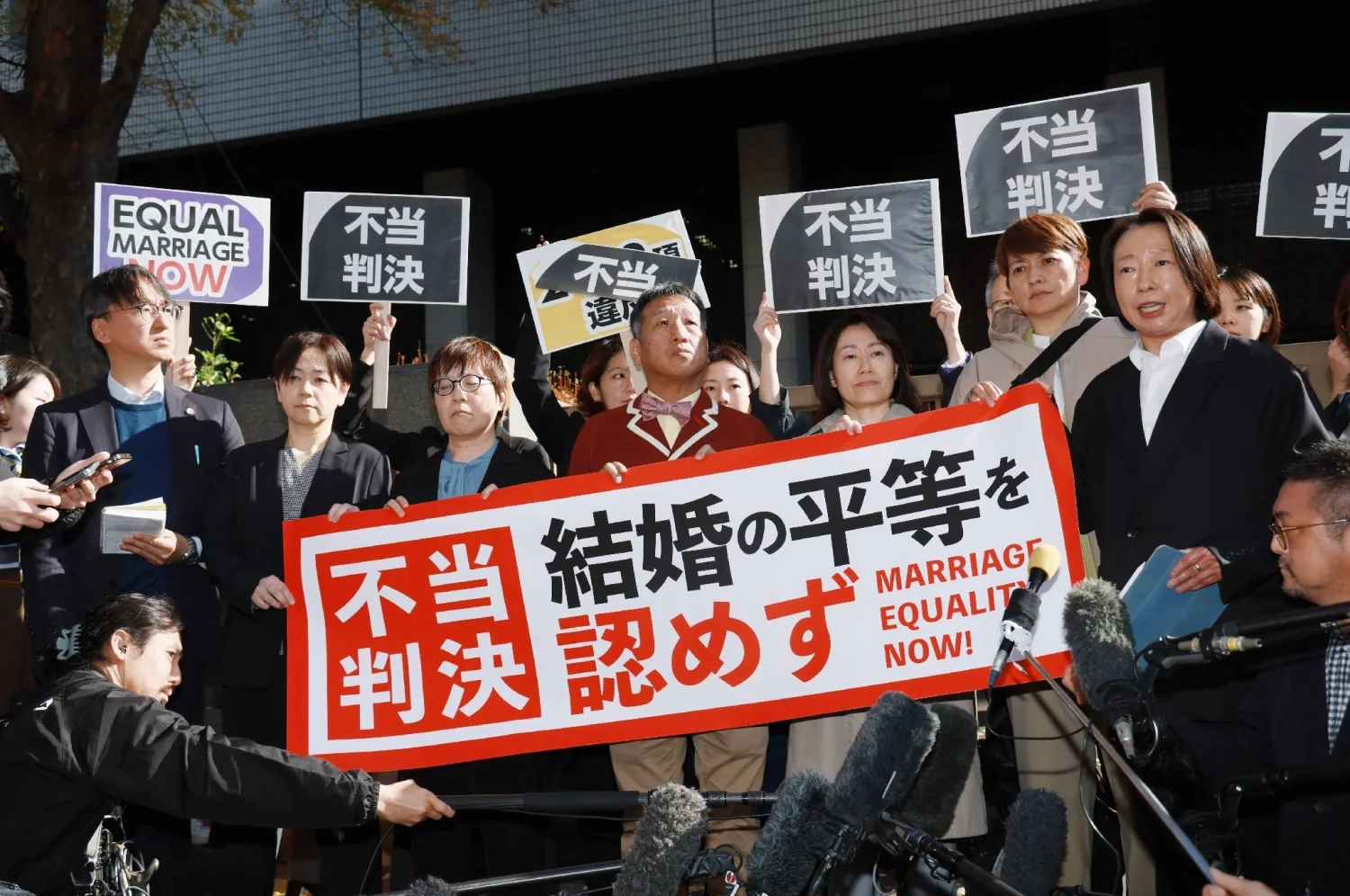
The plaintiffs in this case included Rie Fukuda, 51, and Hiromi Hatogai, 60, who gathered outside the court with a banner reading “Marriage equality denied. Unfair ruling.” They expressed deep disappointment and frustration at the decision. Fukuda stated, “All we want is the same as everyone else; to marry the one we love and be happy.” Hatogai added, “Did the judges even read the documents we submitted, or listen to our voices? Is the justice system really on our side?”
Supreme Court Review and Future Prospects
The six cases are now set to be reviewed by Japan’s Supreme Court, which is expected to provide a unified decision. For LGBTQ+ advocates, this decision marks both a setback and an opportunity for continued activism.
Plaintiff Rie Fukuda, who is 51 years old, expressed her disappointment in the ruling: “All we want is the same as everyone else; to marry the one we love and be happy.” Fellow plaintiff Hiromi Hatogai, 60, felt disbelief and anger, questioning whether the judges had read their documents or listened to their voices. She said, “Did the judges even read the documents we submitted, or listen to our voices?
Is the justice system really on our side?”
Meanwhile, Presiding Judge Ayumi Higashi acknowledged the difficulties faced by LGBTQ+ individuals in Japan and parliament’s inaction regarding same-sex marriages. However, she maintained that it was logical to define marriage as between a man and a woman, citing reproductive unions as crucial for maintaining society.
Expert Analysis and Broader Implications
The decision highlights the ongoing challenges faced by LGBTQ+ rights activists in Japan. While the Supreme Court’s ruling will determine the final outcome, legal experts believe this case could spark broader discussions about equality and constitutional interpretation in Japanese law.
For now, supporters of same-sex marriage continue to gather outside courts, holding banners and expressing their dissatisfaction with the current legal framework. The fight for equal rights remains a contentious issue in Japan, and the upcoming Supreme Court decision is likely to be closely watched by advocates and critics alike.
The ruling recognizes that society’s perception of family has diversified since 1947, when the Constitution was drafted, but ultimately concludes that same-sex marriages do not meet the constitutional definition.
Higashi said that “reproductive unions” between men and women have remained the “normal” method for raising children for generations and are crucial for maintaining society.
At the local level, 541 municipalities—covering approximately 93% of the population—offer partnership certificates, according to Marriage for All Japan. However, these certificates are not legally binding and provide none of the rights attached to marriage, such as inheritance or joint tax filing.
The Tokyo High Court’s decision is a significant development in the ongoing debate over same-sex marriage in Japan. As the case moves forward, it will likely influence public opinion and legal interpretations for years to come.


