
Key Highlights
- The BBC’s new primetime show “Wild Cherry” depicts girls making nude video content for social media influencers.
- The series highlights the issue of toxic femininity and the dangers faced by teenage girls online.
- “Wild Cherry” contrasts with “Adolescence,” a powerful Netflix drama that focused on teenage boys’ experiences.
- The show raises questions about parental awareness and the reality of young girls’ digital lives.
Introduction to “Wild Cherry”
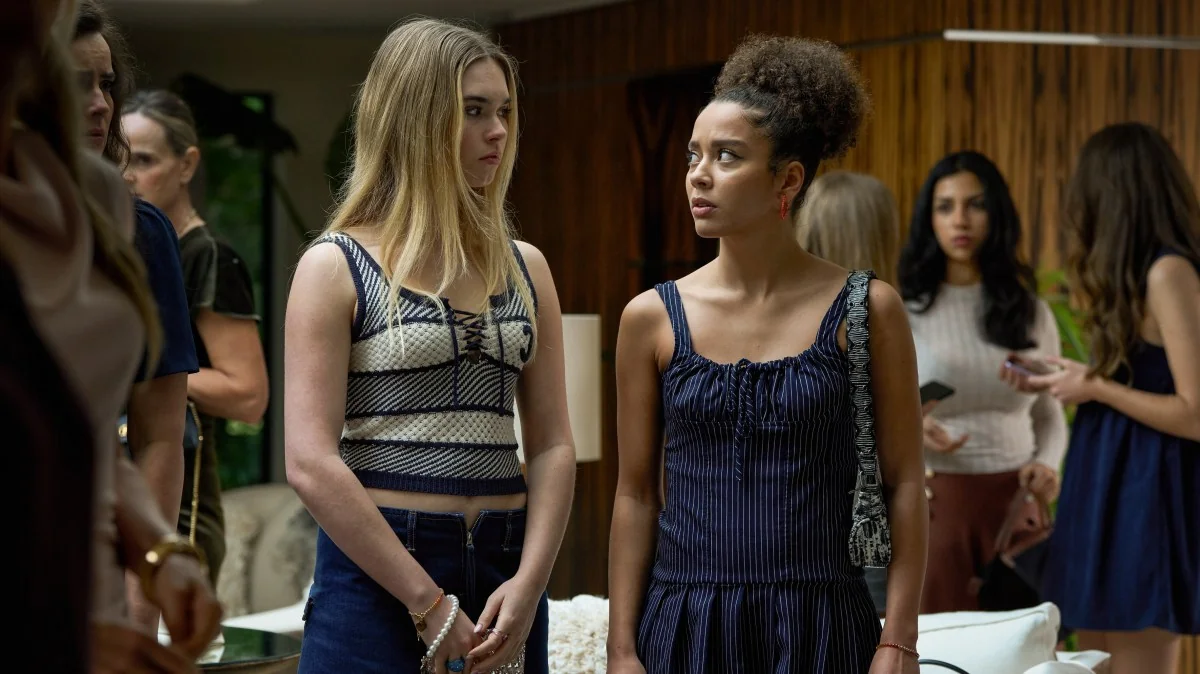
The BBC’s new primetime Saturday slot drama, “Wild Cherry,” premiered in 2025 with a provocative premise. The series stars Amelia May and Imogen Faires as Allegra Lonsdale and Grace Gibbons, two 16-year-old girls who are part of an alarming story that blends reality and fiction. In the first episode, viewers witness a seemingly innocent sleepover turn into a dangerous endeavor where these teenage girls are coerced to make nude videos for social media influencers at a man’s sinister “maker’s house.”
Contextualizing “Wild Cherry” in the Broader Conversation
In 2025, discussions about teenage girls’ experiences online have reached new heights. Following the success of Netflix’s “Adolescence,” which delved into the lives and struggles of a teenage boy under the misogynistic internet, “Wild Cherry” flips the script to center on young women. The series is set in a gated community in Surrey, with the girls attending an all-girls private school that is reminiscent of classic novels like “Malory Towers” and contemporary films such as “Mean Girls.”
Themes and Critiques
The narrative of “Wild Cherry” is rich with themes of toxic femininity and the perils of unchecked online activity. The show’s creators, Nicôle Lecky, have crafted a world that contrasts sharply with the hyper-realism found in “Adolescence.” While the earlier series focused on the consequences of male teenage actions under parental scrutiny, “Wild Cherry” zeroes in on the girls’ oblivious mothers and their own culpability. The central characters, Allegra Lonsdale played by Carmen Ejogo, and Juliet Lonsdale (Eve Best), the mother, represent different facets of this toxic dynamic.
Juliet’s wealth makes her complacent, leading to a dismissive attitude towards the dangers faced by her daughter online. The narrative builds layers of complexity as it delves into how parental ignorance can exacerbate the issues faced by young girls.
Real-World Implications and Expert Insights
According to a 2022 survey conducted by the Personal, Social, Health and Economic (PSHE) Association involving 5,000 British teenagers, more than one-third of girls first received requests for nude images at age 13 or younger. This survey, which highlighted the normalization of such behavior among both peers and strangers online, provides a stark backdrop to “Wild Cherry.” The show’s creators have acknowledged that it serves as a commentary on parental obliviousness and the broader societal issues surrounding teenage girls’ digital experiences. In an interview with Lecky, she noted, “There’s often this sense that women are railing against each other, but as the show progresses, you start to realize they’re actually railing against the establishment.
The question is: can you ever really overcome or overthrow that? Can you push back against that kind of oppression?”
Conclusion
“Wild Cherry,” a new BBC drama, raises critical questions about teenage girls’ experiences in the digital age and the role of parental awareness. By drawing parallels with “Adolescence,” it underscores the need for nuanced discussions around gendered online behavior. The show’s complex narrative and well-crafted characters make it a compelling watch that challenges viewers to reflect on their own roles in shaping safe spaces for young people. The series is available on BBC iPlayer, offering parents and teenagers alike an opportunity to engage with these important themes beyond the screen.


