
Key Highlights
- Astronomer Avi Loeb discusses the potential of comet 3I/ATLAS as an alien technological artifact rather than a natural interstellar object.
- The article highlights twelve anomalies in the behavior and composition of 3I/ATLAS, suggesting it may be more advanced than known comets or celestial bodies.
- Loeb emphasizes that scientists should consider the possibility of technological artifacts when studying interstellar objects to avoid missing important opportunities for scientific discovery.
- The article suggests investing in simultaneous searches for both primitive life forms and technological signatures from interstellar objects, given public interest and potential scientific rewards.
The Case of 3I/ATLAS
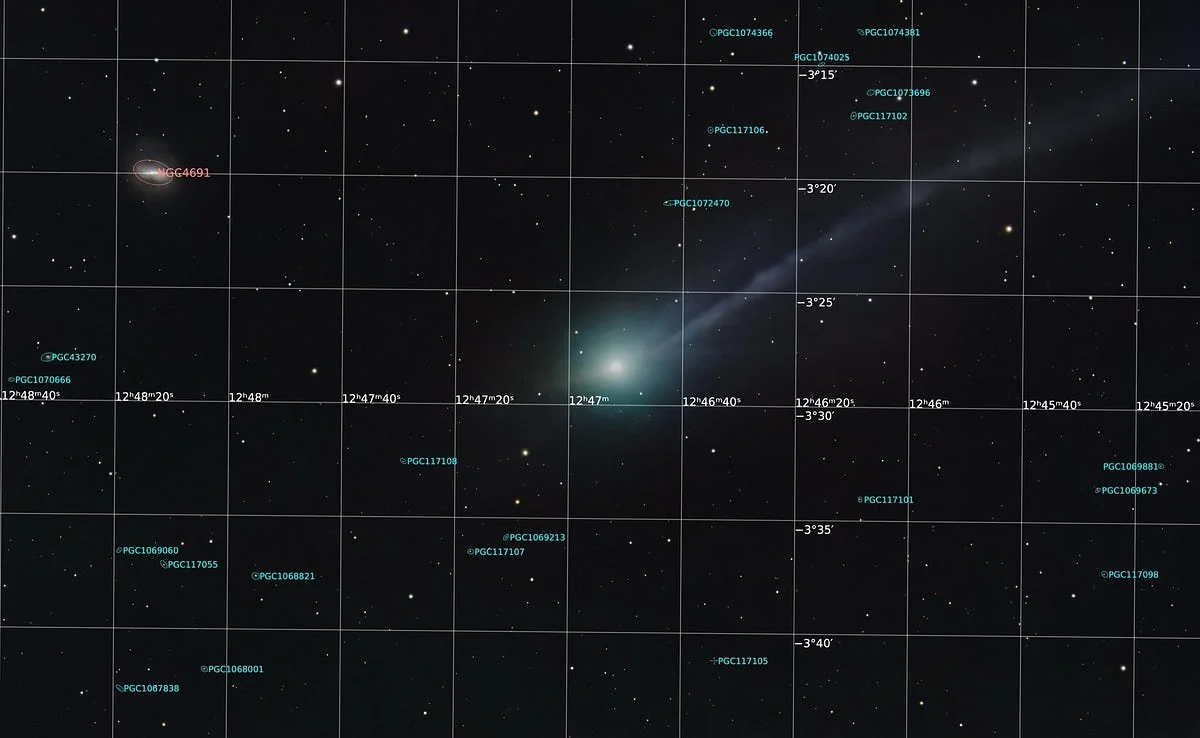
Astronomer Avi Loeb recently presented his controversial hypothesis that the comet 3I/ATLAS, discovered on July 1, 2025, might not be a natural celestial object but an alien technological artifact. This proposition challenges traditional scientific thought and invites a broader discussion about our understanding of interstellar objects.
The Humble Beginnings
Loeb’s perspective is rooted in the idea that we must expand our data sets to include both natural and artificial objects from space. He points out that after decades of comet research focusing on icy rocks, it might be necessary to consider technological artifacts as potential visitors from interstellar space. Loeb explains this concept during an interview with Peter Doocy on “The Sunday Briefing” of Fox News, emphasizing the importance of maintaining a humble scientific approach.
Identifying Anomalies
Loeb identifies twelve key anomalies in 3I/ATLAS that deviate significantly from typical comet behavior. These include its retrograde trajectory, unusual jets, and non-gravitational acceleration. Each anomaly highlights the complexity of interpreting data when dealing with interstellar objects.
For instance:
- The comet’s sunward jet is particularly intriguing, as it does not align with known optical illusions seen in familiar comets.
- Its gas plume contains an unusually high ratio of nickel to cyanide and very little water, which deviates from the composition of known comets like `Oumuamua and 2I/Borisov.
- The comet exhibits non-gravitational acceleration, suggesting massive evaporation but maintaining its structural integrity, unlike typical cometary behavior.
Loeb argues that these anomalies indicate a need for reevaluation of current scientific paradigms. He suggests that comet experts might miss important insights if they only focus on icy rocks and not technological artifacts. This viewpoint is presented as part of the ongoing work in progress, acknowledging that science often reveals unexpected truths.
Broader Implications
The article also touches on broader implications for scientific research priorities. Loeb notes that while the search for microbial life remains a primary focus, there may be greater public and financial interest in searching for technological artifacts from interstellar objects. He suggests investing billions of dollars into simultaneous searches for both primitive and technological signatures to hedge bets and satisfy public curiosity.
Loeb further emphasizes the value of engaging with the public through communication and transparency. He argues that scientists should share their findings openly, even when they are still in progress, as this can foster a more collaborative and dynamic scientific community.
Conclusion
The Future of Interstellar Research
The discussion around 3I/ATLAS underscores the evolving nature of scientific inquiry and the importance of keeping an open mind. As Loeb suggests, we must continually reassess our data sets to include both natural and artificial objects from space. This approach not only enhances our understanding but also aligns with public interest in the search for extraterrestrial life.
By maintaining a balanced and forward-thinking research agenda, scientists can ensure that they are prepared for any unexpected discoveries, whether they come in the form of comets or technological artifacts from interstellar space. The future of interstellar research lies in embracing these possibilities and exploring them with the same rigor and curiosity that has driven scientific progress throughout history.


