
Key Highlights
- The bombing of a key railway line in Poland used for transporting weapons to Ukraine is described as an “unprecedented act of sabotage” by the country’s prime minister.
- No injuries were reported due to the blast, but the event has raised concerns over increased levels of sabotage in Eastern Europe.
- Poland has blamed Russia for previous attacks and considers it one of Moscow’s biggest targets given its role as a hub for aid to Kyiv.
- The incident highlights the ongoing tensions between Russia and Poland amidst the conflict in Ukraine, with both sides denying involvement in such acts.
Unprecedented Sabotage on Polish Railways
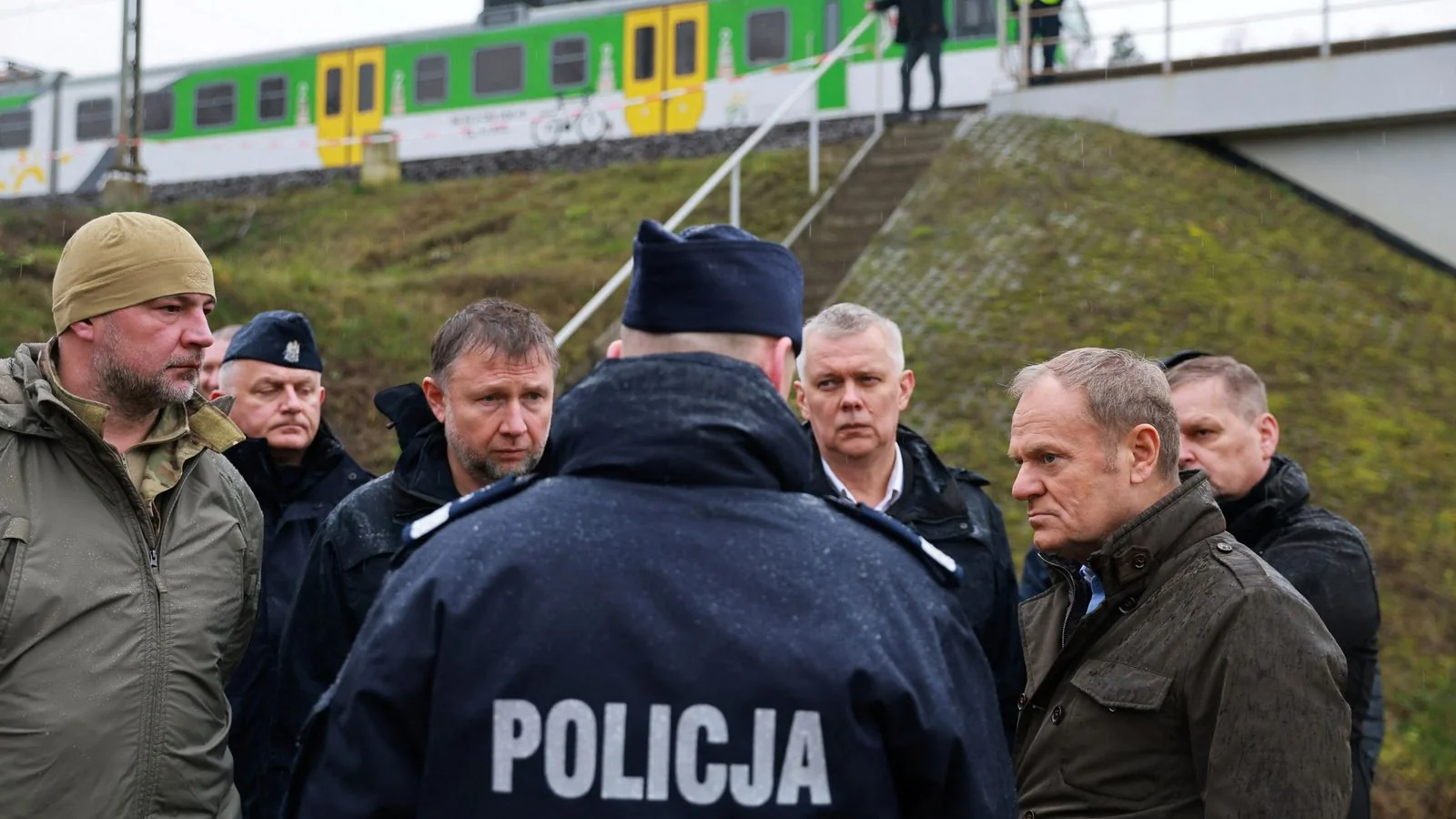
On Monday, 17 November 2025, at around 14:11 UK time, a significant explosion rocked a key railway line connecting Warsaw and Lublin in Poland. The blast occurred on a track that is crucial for transporting weapons to Ukraine, marking the latest in a series of attacks across Eastern Europe.
Prime Minister Donald Tusk characterized the incident as an “unprecedented act of sabotage,” emphasizing its gravity and potential implications. This event comes at a time when tensions between Russia and Poland remain high due to ongoing conflicts in Ukraine, with both sides accusing each other of involvement in various acts of sabotage and cyber-attacks.
Investigations and Impact
The explosion caused significant damage to the railway line near Mika, 62 miles southeast of Warsaw. An investigation is currently underway, with officials stating that a detonated explosive device was responsible for the blast. The exact timing of the incident—whether it occurred late on Saturday or early Sunday—is still under scrutiny.
Local police noted reports of track irregularities raised by a train driver at around 7:40 am on Sunday.
Inspections revealed damage to the track near Mika, as well as another location along the route. The army plans to examine about 75 miles of the Warsaw-Lublin-Hrubieszów line, which links Warsaw to Ukraine by rail and road.
Additionally, a second train traveling on the Swinoujscie to Rzeszow route was damaged when its overhead electrical cables were compromised. This incident is also under investigation. Authorities are working to determine whether this sabotage was part of a coordinated campaign or isolated events.
Broader Context and Regional Tensions
The recent explosion on the railway line in Poland follows a series of high-profile attacks that have hit several European countries since the start of the conflict in Ukraine. In October, Polish authorities detained eight people suspected of planning sabotage on behalf of Russia. Three were involved in an alleged new plan to send exploding parcels to Ukraine.
Meanwhile, European capitals have been concerned about rising levels of sabotage targeting critical infrastructure, including undersea cables.
In December 2025, Finland seized the Eagle S oil ship, which was suspected of damaging the Estlink 2 undersea power cable by dragging its anchor across it. This incident has raised questions about Russia’s involvement in such activities.
Western officials have accused Russia and its proxies of staging numerous attacks across Europe as part of a coordinated campaign of grey zone activity. However, Russia consistently denies engaging in sabotage or damaging critical infrastructure.
Finding Perpetrators Amidst Tensions
In the wake of this latest incident, Prime Minister Donald Tusk has vowed to catch those responsible for the attack and emphasized that regardless of their backers, justice will be served. He wrote on X: “Just like in previous cases of this kind, we will catch the perpetrators, regardless of who their backers are.”
The ongoing investigation into the railway bombing highlights the complex geopolitical landscape in Eastern Europe, where tensions between Russia and Poland remain high. As the conflict in Ukraine continues to evolve, so too do the tactics employed by various actors seeking to influence events on the ground.


