
Key Highlights
- Scientists from the University of Exeter discovered that raising one’s voice can deter seagulls from stealing food.
- The study found that male voices shouting “No, stay away, that’s my food” were more effective at making gulls fly away than speaking in a neutral tone.
- 61 gulls from nine seaside towns participated in the experiment, with 85% of them flying away when shouted at but only 15% fleeing when spoken to nicely.
- The research suggests that seagulls can perceive and react to the acoustic properties in human voices.
Scientists Unveil Effective Method to Deter Seagulls from Stealing Food
Seagulls have long been a nuisance for beachgoers, often stealing food left unattended. However, according to new research from the University of Exeter, raising your voice can effectively deter these birds from invading your space.
Experiment Design and Results
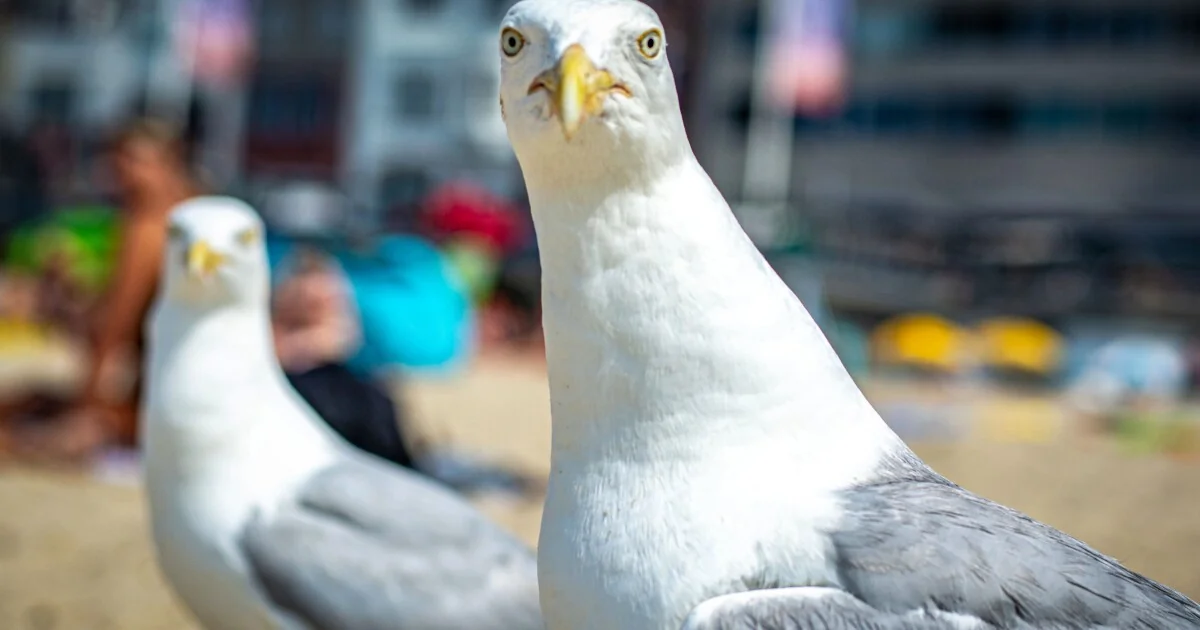
University researchers conducted an experiment in nine seaside towns with a total of 61 seagulls, specifically herring gulls (Larus argentatus). The team placed a container of fries on the ground to entice the birds, then played various voice recordings that varied in tone and volume. These included a neutral spoken message, an aggressive delivery of “No, stay away, that’s my food,” and the sound of a robin.
The results were clear: 85% of the seagulls flew away when shouted at, compared to only 15% fleeing after being spoken to nicely. The robin’s pleasantries had little impact on the birds’ behavior, with over two-thirds still hovering near the food container.
Acoustic Properties and Seagull Behavior
“We found that urban gulls were more vigilant and pecked less at the food container when we played them a male voice, whether it was speaking or shouting,” explained Dr. Neeltje Boogert from the Centre for Ecology and Conservation at the University of Exeter.
Dr. Boogert further elaborated, “The difference was that the gulls were more likely to fly away at the shouting and more likely to walk away at the speaking.
So when trying to scare off a gull that’s trying to steal your food, talking might stop them in their tracks but shouting is more effective at making them fly away.”
The consistent impact of the recordings, despite varied voices, suggests that it’s not what’s said but how the message is delivered that makes the difference. This indicates that seagulls can perceive and react to the acoustic properties in human voices.
Implications for Urban Bird Management
“Normally when someone is shouting, it’s scary because it’s a loud noise, but in this case all the noises were the same volume,” Dr. Boogert explained. “It was just the way the words were being said that was different.” This research shows that there are peaceful ways to deter seagulls without resorting to physical contact or harming them.
The study also highlights the broader issue of how humans interact with urban birds, which can often lead to mistreatment and conflict. “Most gulls aren’t bold enough to steal food from a person,” Dr. Boogert noted. “We don’t want people injuring them as they are a species of conservation concern.”
The research published in the journal Biology Letters demonstrates that simple methods like shouting can effectively manage interactions between humans and seagulls, potentially reducing conflicts at beaches and parks.


