
Key Highlights
- Lloyds Banking Group used staff bank account data in its pay negotiations.
- The comparison showed that employees’ finances fared better than the general public.
- A union claims it is concerning and suggests the use of such data could justify lower pay offers.
- Lloyds defended their practice, stating they used anonymized data to ensure compliance with regulations.
Background on Lloyds Banking Group’s Data Use in Pay Negotiations
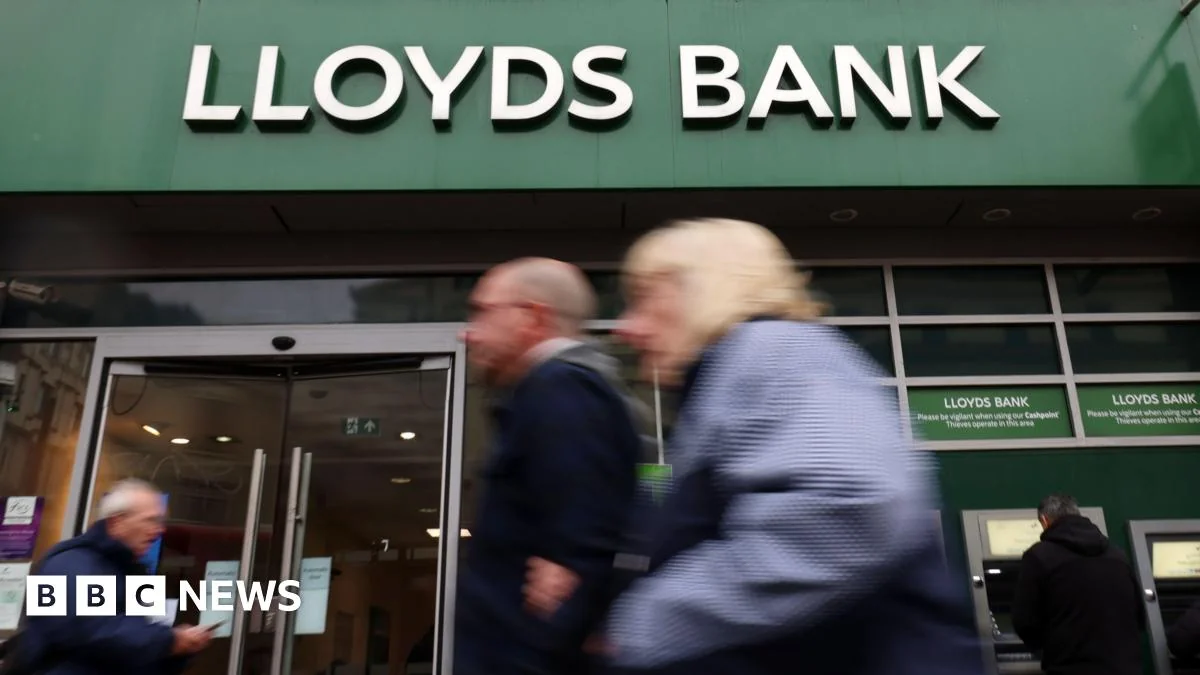
Lloyds Banking Group (LBG), the UK’s largest lender, has come under scrutiny for its use of staff bank account data during pay negotiations. The banking giant used information from over 30,000 employees’ personal accounts to assess their financial resilience and compare it with that of the general public.
The move was part of Lloyds’ strategy to set out plans for next year’s pay deal. According to a presentation made by the company, these data points were combined with salary increases and savings rates of its lowest-paid workers to determine the overall pay offer. The bank claimed that this analysis demonstrated employees’ financial resilience better than their counterparts in the broader public.
Union Concerns and Company Response
The Affinity union, which represents Lloyds’ employees but is not recognized by the group, expressed concerns over the use of staff data. Mark Brown, general secretary of the Affinity union, told the Financial Times (FT), “The fact that staff are also personal account holders doesn’t give the bank carte blanche to do what it wants.” He further emphasized that access to employees’ banking information without their explicit permission was a breach of trust.
Lloyds defended its practices, stating that “aggregated, anonymised data” had been used “in order to ensure compliance with regulations and to reflect common practice of using data to underpin decision-making.” However, correspondence seen by the FT revealed that Lloyds concluded they were more financially resilient than the general public. This analysis was used to justify a lower pay award for employees.
Pay Offer Details and Union Reactions
The banking group offered between 7% and 9% salary increases, with an additional £1,200 in both 2026 and 2027, bringing the minimum salary to £27,400. This offer was approved by recognized unions Unite and Accord but rejected by Affinity. The Accord union challenged Lloyds on its use of customer data for comparison purposes.
Despite the concerns raised by some unions, the general secretary of the Accord union, Ged Nichols, stated that he did not believe the group acted inappropriately. He noted that overall analysis was “really helpful” and the union was confident it negotiated a good pay offer, with two-thirds of members voting in favor.
Legal and Ethical Implications
Jon Baines, senior data protection specialist at law firm Mishcon de Reya, called for the information commissioner to investigate Lloyds’ use of customer data. He questioned whether the exercise was conducted fairly and transparently, asking if individuals were informed in advance that such an analysis was being undertaken.
A spokesperson from Lloyds stated that the banking group was “pleased” with the significant majority vote by members of its recognized unions to support their competitive multi-year pay proposal for 2026 and 2027. The company emphasized its commitment to ensuring compliance with regulations while using data responsibly.
The use of personal bank account data in such a critical aspect as employee compensation negotiations highlights the complex ethical and legal issues surrounding the handling of sensitive financial information by major corporations. As this incident gains further attention, it is likely that more scrutiny will be placed on how banks balance their need for data with protecting the privacy and trust of their customers.


