
Key Highlights
- Northern Lights set to dazzle the UK this week due to a possible ‘Severe’ geomagnetic storm.
- The best chance of seeing the Northern Lights will be across the northern half of the UK, but there is also a chance in clear skies further south.
- Three Coronal Mass Ejections (CMEs) are heading towards Earth from the Sun, potentially causing a Strong G3 or even Severe G4 geomagnetic storm.
- The KP index is an alternative measure of geomagnetic activity and this storm is classed as a rare KP8.
Forecast for the Aurora Borealis
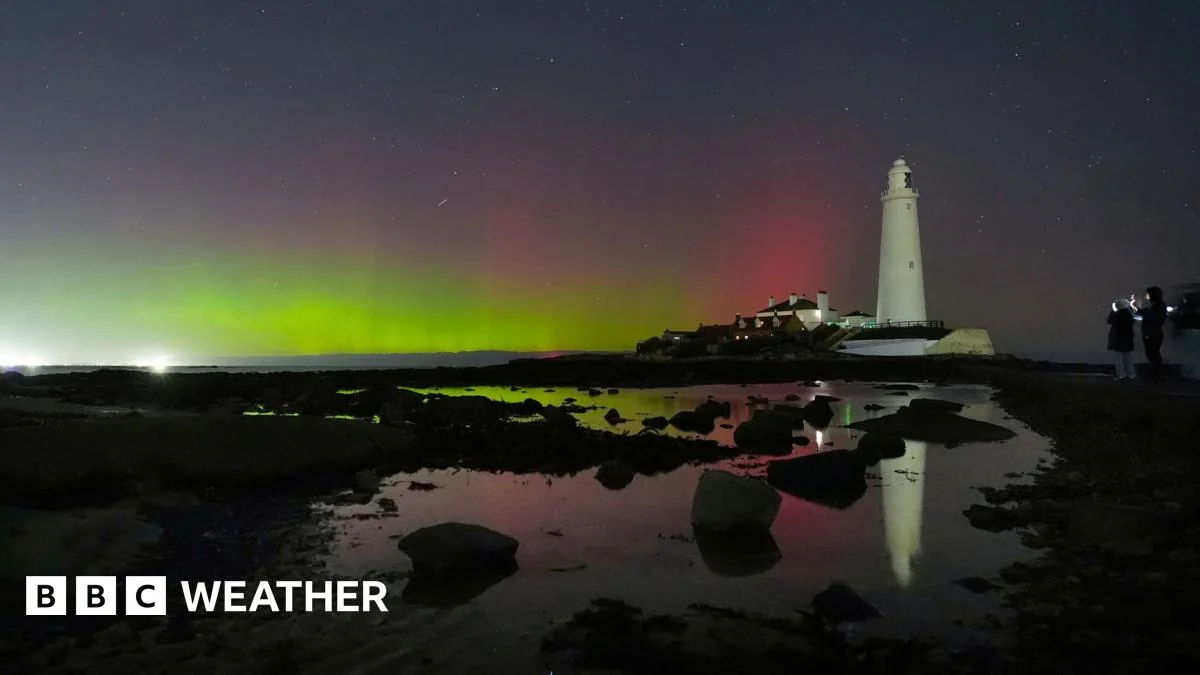
In the coming days, the UK may witness a spectacular display of Northern Lights or aurora due to a possible ‘Severe’ geomagnetic storm. According to the UK Met Office Space Weather forecast, there is a good chance that residents in the early hours of Wednesday or on Wednesday night will be able to see these stunning light displays.
The auroras are caused by solar particles sent towards Earth during an active phase of the Sun. These particles interact with gases in the Earth’s atmosphere, particularly near the poles, creating the spectacular visual phenomena we know as Northern Lights or aurora borealis and southern lights or aurora australis.
Understanding Geomagnetic Storms
A geomagnetic storm is a disturbance in the Earth’s magnetic field that can last for minutes or hours. These storms are caused by Coronal Mass Ejections (CMEs) and solar flares, which send charged particles towards our planet.
The National Oceanographic Atmospheric Administration (NOAA) has reported that there are three CMEs heading towards the Earth from the Sun. If these conditions persist, NOAA predicts a chance of a Strong G3 or even Severe G4 geomagnetic storm on Wednesday into Thursday.
These storms can disrupt satellites and electronic devices but are not harmful to humans due to Earth’s atmosphere protecting us from radiation.
Historically, in 2017, two massive solar flares disrupted GPS navigation systems on Earth. The Carrington Event of 1859 is another example where a huge solar eruption caused significant disruption to telegraph lines and railway signalling in the UK.
Best Viewing Conditions
To see the aurora, viewers should find a dark spot with minimal light pollution and a good view of the northern horizon. The best chance for viewing is across the northern half of the UK, but clear skies further south may also allow for sightings. Clear weather forecasts predict that Scotland, Northern England, and Northern Ireland will have some clear spells in the second half of the night.
For those who might miss this display, BBC Weather advises to keep an eye out for further alerts.
The sun’s magnetic field is set to flip soon, which could impact Earth, adding another layer of interest to the upcoming weeks.
Note: The original article was published 45 minutes ago and mentions events that are expected between February 1st and February 2nd, 2023. This information has been preserved as per the instructions provided.


