
Key Highlights
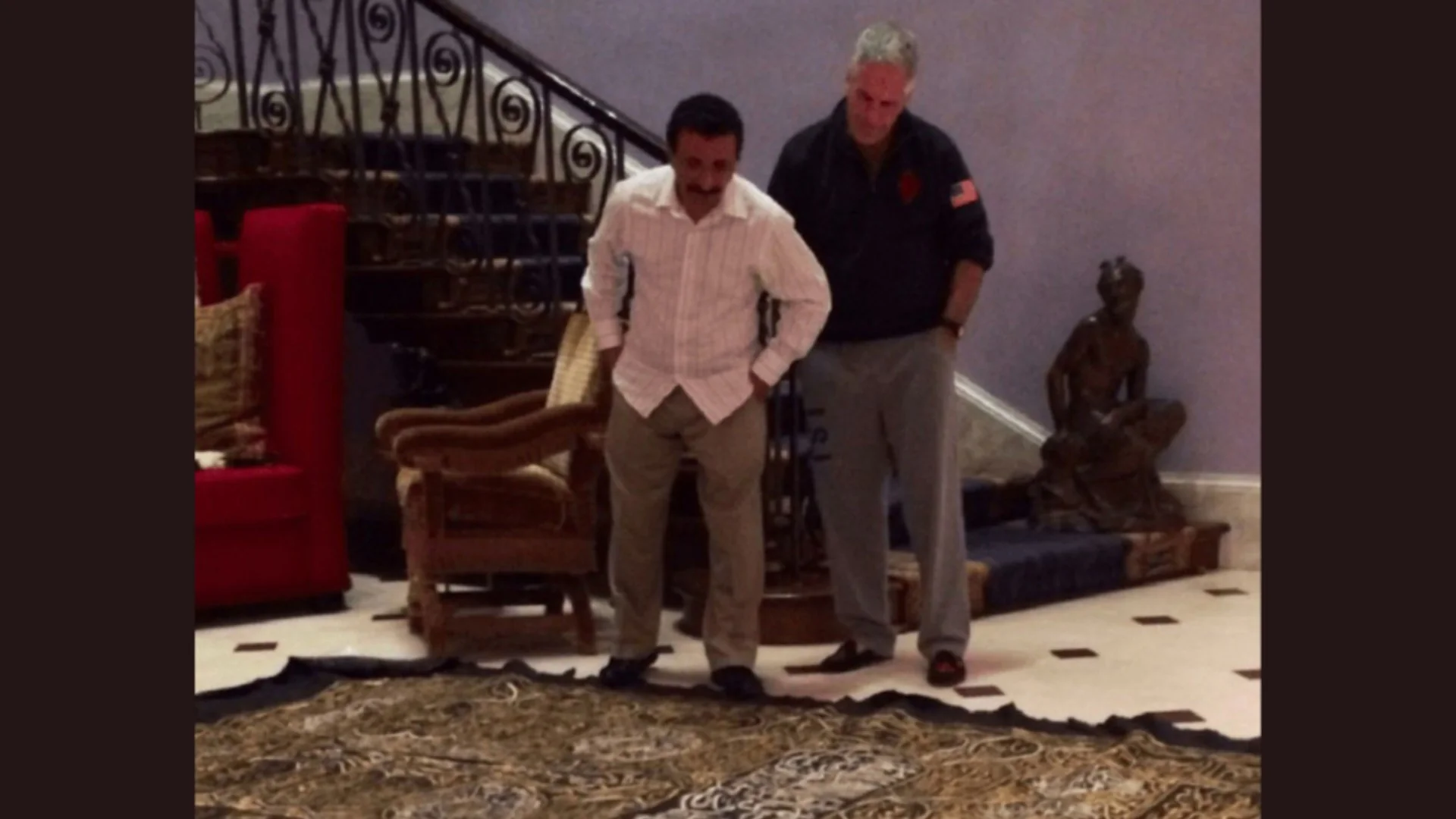
- Images from newly released files show Jeffrey Epstein and a prominent Emirati businessman looking at what appears to resemble the Kiswa, the sacred cloth that covers the Kaaba in Mecca.
- The image was sent as an attachment on 8 May 2014, with a lewd joke attached by Epstein’s email correspondent.
- DP World CEO Sultan Ahmed bin Sulayem had a long-standing relationship with Epstein and discussed sexual experiences in emails.
- New MEE: Jerusalem Dispatch questioned the authenticity of the cloth depicted in the viral image based on an “internal expert review.”
The Strange Intersection of Business and Sin
Jeffrey Epstein, the infamous financier and convicted sex offender, is back in the spotlight, this time with a fragment that seems to resemble the Kiswa, the black cloth that covers Islam’s holiest site, the Kaaba. The image, part of newly released files, shows Epstein alongside Sultan Ahmed bin Sulayem, CEO of DP World, looking down at what appears to be a sacred cloth. This encounter takes place in a world where business and sin often coexist, creating uncomfortable intersections that challenge our notions of propriety.
The Context
On 8 May 2014, Epstein received an email from a redacted address containing both the image and a lewd joke. The joke, “Be careful what you think is a giant wallet in someone’s trouser,” hints at the dark underbelly of their relationship. This moment captures more than just a casual glance; it symbolizes a complex web of interests where business and personal demons intertwine.
The Players
EPSTEIN, Jeffrey – The financier who built his empire on questionable practices and ended up in prison for soliciting prostitution from a minor. His relationships with powerful figures like Sultan Ahmed bin Sulayem raise questions about the true nature of business networks.
SULAYEM, Sultan Ahmed – CEO of DP World since 2016, a company that has investments in ports and infrastructure around the world. The emails between him and Epstein reveal a level of personal interaction that defies conventional boundaries.
The Skeptics
New MEE: Jerusalem Dispatch, an online news publication, questioned the authenticity of the cloth depicted in the viral image based on an “internal expert review.” They cited discrepancies around size, material, and patterns. This skepticism adds another layer to the story, highlighting how even sacred objects can become mired in controversy.
EPSTEIN files show that pieces of the Kiswa were delivered to him through UAE-linked contacts. The shipment details are a testament to the lengths people will go to secure connections with those who hold power and influence. From air freight to customs arrangements, each step is meticulously documented, reflecting the complex web of interests that Epstein navigated.
A Cynical View
You might think this is new, but it’s a continuation of a long-standing trend where business deals are made on shaky moral ground. The image and the emails encapsulate a world where sacredness is used as a tool for personal gain, creating a chilling narrative that challenges our understanding of corporate ethics.
The Kiswa, a cloth with immense religious significance, becomes a symbol of this broader issue. It’s not just about Epstein or Sulayem; it’s about the system they operate within, where such deals can be sealed over a casual glance at what appears to be holy ground.


