
Key Highlights
- The men’s Olympic downhill course at Stelvio is considered one of the most physically and mentally demanding on the World Cup circuit.
- Top skiers like Marco Odermatt are favored to compete in the race, but the course poses significant challenges for all participants.
- Conditions can vary widely, making it difficult for athletes to prepare adequately.
- The course demands a combination of bravery, technical precision, and physical strength from the skiers.
The Stelvio Challenge: A Race Like No Other
The 2026 Winter Olympics in Milan Cortina have their eyes on the most treacherous slope in alpine skiing history—the Stelvio course. This beast of a piste, located in the heart of Italy’s Alps, is not for the faint-hearted.
A Fierce Course
Leo Ducros, a World Cup skier, describes it as a mix between Wolverine and Batman: “Dark because of the shadow, its icy surface hard like Wolverine’s claws,” he explained. “It’s almost mystic. Nothing can prepare you for the Stelvio.”
The Course in Detail
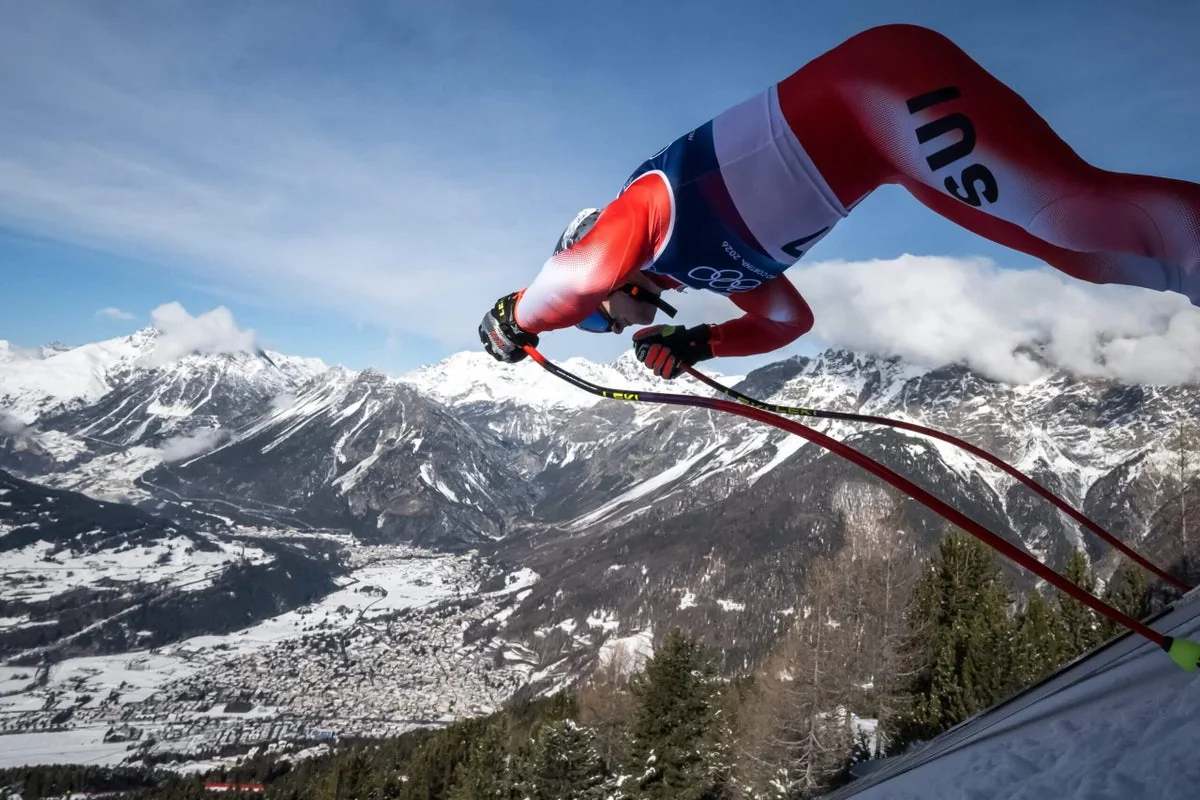
At 3,442 meters vertiginous, the course presents a daunting challenge. Skiers hit speeds of 87mph (140km/h) after just 15 to 20 seconds, followed by physically demanding turns and an iconic jump that catapults them around 45 meters in the air.
Conditions and Preparation
The course can be unpredictable. In December, when the piste is almost entirely in shade and the snow is sprayed with water until it freezes, conditions are nearly impossible to manage. However, this weekend, there will at least be light, but the challenge remains.
Mental Toughness
Skiers must be mentally prepared for the intense physical demands of Stelvio. “You need to be brave, technically very good, physically strong and a little bit crazy!” says Ducros. The course demands a high level of mental fortitude, as skiers face fatigue, pain in their legs, and the potential for falls.
Marco Odermatt’s Expectations
Marco Odermatt, the greatest male Alpine skier of his generation, will be one of the favorites to win. However, he acknowledges the difficulty: “It’s a fight for survival,” he once described it. This year, Fredrik Møller was airlifted to hospital after dislocating his shoulder during a training run, while Austria’s Daniel Hemetsberger suffered from a swollen eye and bloodied nose.
Training and Visualization
A general view of the men’s downhill course at Stelvio Alpine Skiing Centre. Skiers must visualize the course to succeed. “There are no off moments,” says Nils Allègre, who has raced on the piste seven times. Training runs allow athletes to get a feel for the slope, but preparation goes beyond physical training.
Expert Opinions
Skiers and coaches stress the importance of mental preparation. “The brain has a brief moment to think,” says Allègre. “As lactic acid builds, legs begin to feel swollen, as if a blood pressure cuff were tightening around the muscles.” The course demands bravery and precision, with no room for doubt.
The 2026 Winter Olympics are set to provide thrilling moments on the Stelvio course. Stay tuned for the race on February 6th at 10:30 p.m., where the brave will conquer the formidable challenge of the alpine slope.


