
Key Highlights
- The mysterious singer with millions of streams, Sienna Rose, has raised suspicions among music industry professionals due to her improbable rise and potential AI-generated nature.
- Multiple streaming platforms have flagged several of Rose’s songs as being detected and marked as computer generated by their AI tools.
- Experts from Deezer explain that certain “AI artefacts” like hisses in the music can be used to identify such tracks, despite them not always being perceptible to listeners.
- The case of Sienna Rose raises broader questions about the impact of AI-generated music on the industry and whether it poses a threat to real artists.
Sienna Rose: The Mysterious Singer with Millions of Streams
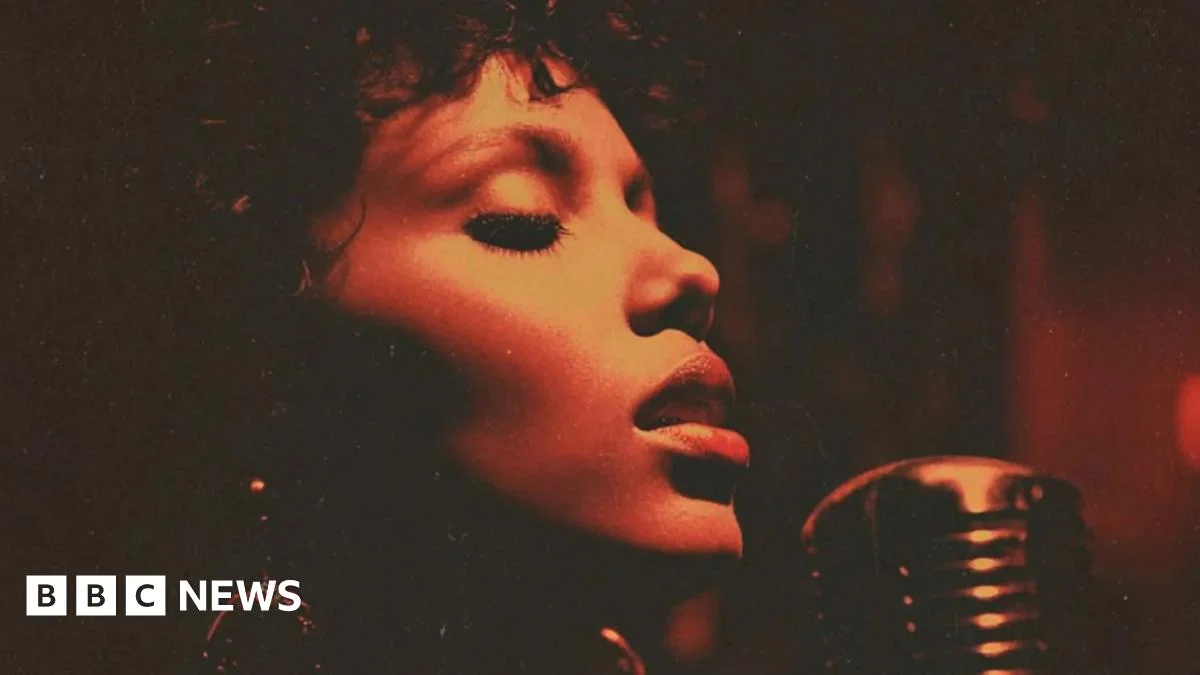
Sienna Rose has almost three million monthly listeners on Spotify, making her an enigma in the music industry. Her rise to prominence is quick and unexplained, raising suspicions that she might be a creation of artificial intelligence (AI).
The Rise of Sienna Rose
Within just a few months, three of Rose’s songs have made it into Spotify’s Viral Top 50. The most notable track, “Into the Blue,” has been played over five million times on the platform. If she continues this trajectory, Sienna Rose could become one of the year’s hottest new stars. However, there is a significant issue: All signs indicate that she might not be real.
AI Suspicions
Streaming service Deezer, which has developed tools to tackle AI music, told the BBC that “many of her albums and songs on the platform are detected and flagged” as computer-generated. This claim is supported by a series of indicators pointing towards an AI artist:
- No social media presence
- No gigs played
- No videos released
- An unusually high number of songs uploaded in a short period (at least 45 tracks between September and December)
Her Instagram account, currently deactivated, featured a series of images that appeared to have been generated by AI image generators. This further adds to the suspicion about her authenticity.
The Nature of Sienna Rose’s Music
Rose’s music, which includes songs like “Into the Blue” and “Breathe Again,” is often compared to jazz-influenced soul tracks. However, many listeners have noticed what they identify as “AI artefacts.” Playing “Under the Rain” or “Breathe Again” reveals a telltale hiss throughout the tracks, which is characteristic of music generated by apps like Suno and Udio.
“When the software adds all the layers and the instruments, it introduces errors,” explains Gabriel Meseguer-Brocal, a senior research scientist for Deezer. “They’re not perceptual, we cannot listen to them, but they’re easy to spot if you do a few mathematical operations.” These errors act like a fingerprint, making it possible to detect which piece of software was used to create any piece of music.
The Impact on the Music Industry
The mystery surrounding Sienna Rose poses bigger questions about AI-generated music and its impact on the industry. For casual listeners, inconsistencies in drum patterns, bland lyrics, and a singer who never strays from the melody or lets rip on the final chorus have been key indicators.
Pop star Raye expressed concern: “There’s no reason to feel a threat. I don’t write because I’m trying to be the best writer.
I write because I’m trying to tell my story.” This sentiment is echoed by Kojey Radical, who said he was not worried about AI when he couldn’t even trust his washing machine.
The case of Sienna Rose highlights the growing challenge faced by the music industry as AI software becomes more sophisticated. While some labels are turning towards AI clones to create viral artists with minimal cost, the quality and authenticity of such creations remain questionable.
Industry Reactions
Sterile reactions from major streaming services further complicate matters. Spotify, for instance, defended the presence of artists like Rose on its playlists, stating that it’s not always possible to draw a simple line between ‘AI’ and ‘non-AI’ music.
However, Deezer has taken a stricter stance by reporting 34% of songs uploaded daily as AI-generated. This rapid increase in AI-created content is a cause for concern, especially given the potential economic implications for real artists.
The broader issue at play here is whether AI-generated music can compete with genuine human artists. While Sienna Rose may or may not be real, her case underscores the ongoing debate about the future of the music industry and the role of artificial intelligence in shaping it.


